Skip to main content ITU
IT Universitety of Copenhagen - Logo
  • Programmes
  • Professional Education
  • Research
  • Collaboration
  • About ITU
  • Organisation
    • Board of Directors
    • Advisory Panels
  • Values, strategy and principles
    • Diversity Equity and Inclusion
    • Pedagogical principles
  • Facts and Figures
    • Annual reports
    • Key figures
    • Development Contracts
    • Quality and Educational Environment
    • Transparency and Openness
    • Articles of association
    • Asset Management
    • The story of ITU
  • Press and news
    • News from ITU
    • Press contacts
    • Press photos
    • Find an expert
    • Logos
  • Vacancies
    • Job agent
    • Test policy
    • Competence profiles
Search
  • Dansk
  • English

ITU

Frontpage

ITU / Programmes

Programmes

ITU / Professional Education

Professional Education

ITU / Research

Research

ITU / Collaboration

Collaboration

ITU / About ITU

About ITU

ITU / Programmes / BSc Programmes New

BSc Programmes New

ITU / Programmes / MSc Programmes New

MSc Programmes New

ITU / Programmes / Student Life

Student Life

ITU / Programmes / International students

International students

ITU / Programmes / Open House new

Open House new

ITU / Professional Education / Master in IT Management

Master in IT Management

ITU / Professional Education / Single subjects

Single subjects

ITU / Professional Education / Short courses

Short courses

ITU / Professional Education / Contact

Contact

ITU / Research / Research centers

Research centers

ITU / Research / Sections and research groups

Sections and research groups

ITU / Research / Research resources

Research resources

ITU / Research / PhD Programme

PhD Programme

ITU / Collaboration / Collaboration with students

Collaboration with students

ITU / Collaboration / Employer Branding

Employer Branding

ITU / Collaboration / Research innovation

Research innovation

ITU / Collaboration / Student entrepreneurship

Student entrepreneurship

ITU / About ITU / Organisation

Organisation

ITU / About ITU / Values, strategy and principles

Values, strategy and principles

ITU / About ITU / Facts and Figures

Facts and Figures

ITU / About ITU / Press

Press

ITU / About ITU / Vacancies

Vacancies
  • Programmes
  • Professional Education
  • Research
  • Collaboration
  • About ITU
  • BSc Programmes
  • MSc Programmes
  • Student Life
  • International students
  • Open House
  • Master in IT Management
  • Single Subjects
  • Short courses
  • Contact
  • Centres, hubs & labs
  • Sections and research groups
  • Research resources
  • PhD Programme
  • Collaboration with students
  • Employer Branding
  • Research innovation
  • Student entrepreneurship
  • Organisation
  • Values, strategy and principles
  • Facts and Figures
  • Press and news
  • Vacancies
  • BSc in Global Business Informatics
  • BSc in Digital Design and Interactive Technologies
  • BSc in Software Development
  • BSc in Data Science
  • Applying for a BSc programme
  • MSc in Digital Innovation & Management
  • MSc in Digital Design and Interactive Technologies
  • MSc in Software Design
  • MSc in Data Science
  • MSc in Computer Science
  • MSc in Games
  • Master's reform
  • Applying for an MSc programme
  • Practical information for international students
  • Ask a student
  • Women in tech
  • Student organisations at ITU
  • Study start
  • Labs for students
  • Special Educational Support (SPS)
  • Study and Career Guidance
  • Exchange students
  • Guest students
  • ITU Summer University
  • Open House - BSc programmes
  • Open House - MSc programmes
  • Centre for Digital Play
  • Centre for Climate IT
  • Center for Computing Education Research
  • Centre for Digital Welfare
  • Centre for Information Security and Trust
  • Danish Institute for IT Program Management
  • Maritime Hub
  • Labs
  • Data Science
  • Data, Systems and Robotics
  • Digital Business Innovation
  • Digitalization Democracy and Governance
  • Human-Computer Interaction and Design
  • Play Culture and AI
  • Software Engineering
  • Technologies in Practice
  • Theoretical Computer Science
  • Research groups
  • ITU Research Portal
  • Find researcher
  • Research ethics and integrity
  • Good Scientific Practice
  • Technical Reports
  • About the PhD Programme
  • PhD Courses
  • PhD Defences
  • PhD Positions
  • Types of Enrolment
  • PhD Admission Requirements
  • PhD Handbook
  • PhD Support
  • Project collaboration
  • Project Market
  • Project postings
  • Post a project posting in the job bank
  • IT Match Making
  • Post a job in the job bank
  • Hire an Industrial PhD
  • ITU NextGen
  • ITU Business Development
  • Board of Directors
  • Advisory Panels
  • Diversity Equity and Inclusion
  • Pedagogical principles
  • Annual reports
  • Key figures
  • Development Contracts
  • Quality and Educational Environment
  • Transparency and Openness
  • Articles of association
  • Asset Management
  • The story of ITU
  • News from ITU
  • Press contacts
  • Press photos
  • Find an expert
  • Logos
  • Job agent
  • Test policy
  • Competence profiles
Local data centers can become sustainable alternatives to the tech giants
ITU  /  About ITU  /  Press  /  News from ITU  /  Local data centers can become sustainable alternatives to the tech giants

Local data centers can become sustainable alternatives to the tech giants

Today, much of our data is stored in huge data centers owned by tech giants like Amazon and Google. Local data centers might in the future present a better and more sustainable alternative, says ITU Professor Philippe Bonnet, who is experimenting with local data centers in the Orkney Islands.

Computer Science DepartmentResearchdata storagegreen ITPhilippe Bonnet

Written 20 December, 2018 10:07 by Vibeke Arildsen

Every time we check Instagram, stream a movie or upload a picture to the cloud, data is sent through a data center – often owned by a major international tech company. As long as the internet connection is good and the data amounts small, this is typically a smooth process.

However, there are two major disadvantages of storing data in the large data centers, says Philippe Bonnet, Professor in data systems at ITU.

"Firstly, transporting data across long distances requires enormous amounts of power. And secondly, you may have private or sensitive data that you don’t necessarily want to get into the hands of a large tech company," he says.

According to Philippe Bonnet, smaller decentralized data centers might in the future become a meaningful alternative that addresses both sustainability and privacy challenges – especially when it comes to data produced and used in the same geographical place.

Local data centers in the Orkney Islands

In a recently completed research project, Philippe Bonnet has developed a concept for such local data centers in the Orkney Islands north of the Scottish mainland. The isolated location of the islands coupled with a substantial production of sustainable energy from wind and waves make them an ideal place to experiment with a new type of data centers.

The Orkney Data Cloud research project

In the Orkney Cloud project, researchers from the University of Edinburgh, IT University, in collaboration with the energy company Aquatera Ltd., investigated how to create local cloud services on the Orkney Islands off Scotland.

The project examined both technical and social challenges associated with the idea of ​​decentralized data centers.

The project was funded by Mozilla and has just finished. Read more on the project's website.

"The Orkney energy system produces large amounts of data, which is also used locally. It doesn’t make sense to store and process this data in Dublin or elsewhere. If we instead store the data in local data centers, processing time will be shorter and the energy consumption will decrease, since data won’t be sent back and forth. So it is also a more environmentally sustainable solution," he says.

Small data centers can also be plugged directly into the local sustainable energy sources, thus becoming even more energy-efficient.
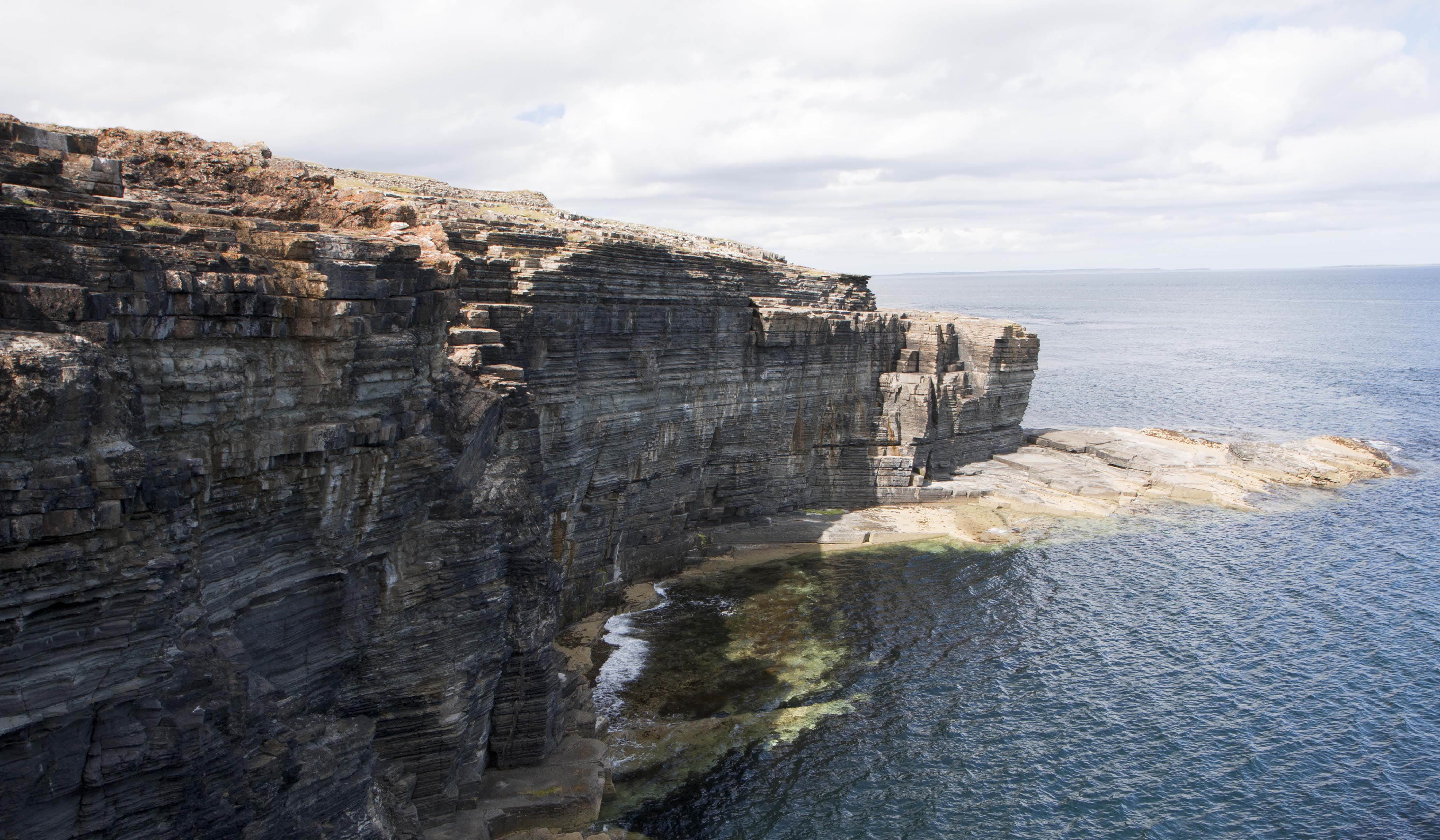
Students from ITU are currently working on implementing decentralized data centers in the Orkney Islands.
The decentralized data infrastructure on the Orkney Islands has not yet been implemented, but several groups of ITU students are currently experimenting with various technical solutions in collaboration with local energy companies.

Valuable local data

According to Philippe Bonnet, decentralized data storage not only makes sense in remote island communities like the Orkney Islands. He believes that the question of how data is stored is central when we decide what kind of society we want to create.

Right now, we are a situation where we allow international technology companies to store, and therefore reap the value of, many valuable and critical data - for example about our roads, energy supply and schools.

Philippe Bonnet, Professor at ITU

"Data centers are the backbone of the digital economy. Right now, we are a situation where we allow international technology companies to store, and therefore reap the value of, many valuable and critical data - for example about our roads, energy supply and schools. This might make good economic sense for global services, but not necessarily for services where data is produced and used locally," he says, adding that no good alternatives to the large data centers currently exist.

Therefore, more research is needed on alternative models such as local decentralized data centers, he believes.

"If people in the Orkney Islands – or people in Copenhagen for that matter – can take ownership of their own IT infrastructure, we will get a different kind of society than what we get if we depend on the big tech companies."

Harder to scale

The disadvantage of small decentralized data centers is, however, that they require quite a lot of maintenance relative to their size, says Philippe Bonnet.

"Large data centers like those being built in Denmark right now are super efficient and require only a small number of maintenance staff to run considering the amount of data that they are storing. Decentralized data centers don’t have the same options for scaling," he says.

It is also a human challenge that requires people to share knowledge and experience across distances.

Philippe Bonnet, Professor at ITU

Maintaining such a decentralized infrastructure is not just a technical issue, he adds.

"It is also a human challenge that requires people to share knowledge and experience across distances. How to tackle this is an open question."

Further information

Philippe Bonnet, Professor, email phbo@itu.dk

Vibeke Arildsen, Press Officer, phone 2555 0447, email viar@itu.dk

News

PhD student co-authors book on cyber dilemmas

PhD student co-authors book on cyber dilemmas

9 January, 2026

The Danish book, Cyberdilemmaer - om mødet med virkeligheden, which has just been published, focuses on everyday situations where we must make decisions about IT security. One of the book’s authors is Raha Asadi, a PhD student at the IT University of Copenhagen, who hopes the book will help create a basis for dialogue between technical and non-technical colleagues.

New ITU Podcast: The IT security expert on the political desire for mass surveillance?

New ITU Podcast: The IT security expert on the political desire for mass surveillance?

21 December, 2025

In a pilot episode of the IT University’s new podcast series, Tech-away, Carsten Schürmann, Head of the Centre for Information Security and Trust, discusses the CSA Regulation, under which the EU wants to require all messaging services to scan our digital communications. Although the proposal was blocked by German politicians, the political desire for mass surveillance is far from dead.

ITU researcher secures DKK 6.99 million for linguistically grounded language models

ITU researcher secures DKK 6.99 million for linguistically grounded language models

18 December, 2025

Carlsberg Foundation funds project to embed real-world language knowledge into AI – beyond scale and compute.

ITU researchers receive international award

ITU researchers receive international award

16 December, 2025

AIS Impact Award goes to Danish researchers for the first time, recognising ITU research that sets the standard for ethical use of blockchain technology.

Privacy is not dead yet

Privacy is not dead yet

14 December, 2025

While some politicians keep pushing for “lawful access” to our private messages, a new method may make it possible to keep our private communications private – even if end-to-end encryption in, for instance, Signal is “lawfully” decrypted. Associate professor at the IT University of Copenhagen, Rosario Giustolisi, explains how.

How to prepare for the threat of quantum computers

How to prepare for the threat of quantum computers

30 November, 2025

The dawn of quantum computers threatens to break the security we have relied on for decades. To counter this, Bernardo David, associate professor at the IT University of Copenhagen, is developing information-theoretic cryptography schemes.

New research project explores human-AI entanglement to promote responsible use

New research project explores human-AI entanglement to promote responsible use

24 November, 2025

Professor at ITU, Jichen Zhu, has secured 7.19 million kroner from the Independent Research Fund Denmark for a new project that investigates how people interact with artificial intelligence in highly subjective domains such as emotion recognition – and how to design tools that support more responsible use.

ITU researcher wants to make AI more trustworthy

ITU researcher wants to make AI more trustworthy

21 November, 2025

Associate Professor Christian Hardmeier has been granted DKK 7.18 million from the Independent Research Fund Denmark. The grant is given for a project that investigates how large language models can better communicate uncertainty to users.

Can nature’s own design process help the next big AI leap?

Can nature’s own design process help the next big AI leap?

19 November, 2025

ITU professor Sebastian Risi is the co-author of a new open-access resource on an emerging field that could shape the future of artificial intelligence.

Nordic project with ITU participation aims to strengthen future citizenship

Nordic project with ITU participation aims to strengthen future citizenship

6 November, 2025

In an era of algorithms, misinformation, and weakened trust in institutions, children and young people must be equipped to navigate democracy in the digital society. A new Nordic project focuses on solutions – and Associate Professor Gitte Stald from the IT University of Copenhagen plays a central role.

Denmark on the Digital Frontline: Lessons learned from Ukraine

Denmark on the Digital Frontline: Lessons learned from Ukraine

3 November, 2025

Drawing on data from Ukraine, researchers from the IT University of Copenhagen are investigating how to prepare Danish society for cyberattacks on the digital critical infrastructure.

Professor Portrait: Oliver Krancher explores knowledge and learning in the digital workplace

Professor Portrait: Oliver Krancher explores knowledge and learning in the digital workplace

3 November, 2025

With a background in business information systems and a passion for understanding how organisations use technology, Professor Oliver Krancher has spent his career investigating the role of knowledge in digital work. On 14 November, he will present his inaugural lecture at ITU.

The climate is changing – and so are we

The climate is changing – and so are we

29 October, 2025

With a grant of 3.1 million kroner from the Independent Research Fund Denmark, Associate Professor Vedran Sekara from the IT University of Copenhagen will map how human behaviour and mobility are changing in response to climate change.

Decoding the Brain: Can AI help predict human behaviour?

Decoding the Brain: Can AI help predict human behaviour?

27 October, 2025

What if it were possible to read the brain like a book? Paolo Burelli and his colleagues at the IT University’s brAIn Lab work at the cutting edge of digital technology and neuroscience. On 5 November, Paolo Burelli will present their research at Digital Tech Summit, in a talk titled “Decoding the Brain: How AI Unlocks Human Behavior.”

Professor Portrait: Rasmus Ejlers Møgelberg creates new mathematical worlds

Professor Portrait: Rasmus Ejlers Møgelberg creates new mathematical worlds

20 October, 2025

With a background in mathematics and a passion for the abstract layers of the discipline, Professor Rasmus Ejlers Møgelberg develops theories that enhance the understanding and robustness of modern software. Rasmus Ejlers Møgelberg will deliver his inaugural lecture at the IT University on 24 October.

ITU researchers secure prestigious Villum Experiment grants

ITU researchers secure prestigious Villum Experiment grants

2 October, 2025

Projects in infant cognition, robotics, and privacy-preserving AI receive funding for early-stage research.

Sami Brandt is the first winner of the ITU Research Award

Sami Brandt is the first winner of the ITU Research Award

29 September, 2025

Sami Brandt is the winner of the first-ever ITU Research Award. Please find out more about Sami Brandt and his research in this article.

Cancan Wang wins the 2025 ITU Teaching Award

Cancan Wang wins the 2025 ITU Teaching Award

29 September, 2025

Associate Professor Cancan Wang from the Digitalization, Democracy, and Governance (DDG) section at ITU is this year’s Teaching Award recipient. We spoke with Cancan about her teaching practices and what the award means to her.

Professor portrait: Eva Rotenberg wants to make algorithms simpler – for everyone’s benefit

Professor portrait: Eva Rotenberg wants to make algorithms simpler – for everyone’s benefit

22 September, 2025

On October 3, 2025, at 14:30, Professor Eva Rotenberg will deliver an inaugural lecture in Auditorium 02 at the IT University of Copenhagen. The lecture is titled: “A story of shortest paths.”

Professor portrait: Luca Aiello wants to make the internet a better place

Professor portrait: Luca Aiello wants to make the internet a better place

15 September, 2025

On 24 September 2025 at 14:30, Professor Luca Aiello will give his inaugural lecture in Auditorium 0 at the IT University in Copenhagen.

IT-Universitetet i København - Logo

Contact

IT University of Copenhagen
Rued Langgaards Vej 7
DK-2300 Copenhagen S
Denmark

Telephone: +45 7218 5000
E-mail: itu@itu.dk
All contact information
How to get here
Building accessibility

Explore

News
Vacancies
Events

Useful links

ITU Library Service
ITU Student
ITU Alumni
Body of External Examiners
Press

Invoicing

CVR-nr. 29 05 77 53
P-number: 1005162959
EAN-nr. 5798000417878
Send invoice

Web

Web Accessibility Statement
Privacy Statement

ITU at Instagram ITU at Facebook ITU at Linkedin ITU at Youtube ITU at Bluesky

This page is printed from https://itu.dk/